
 By Camille
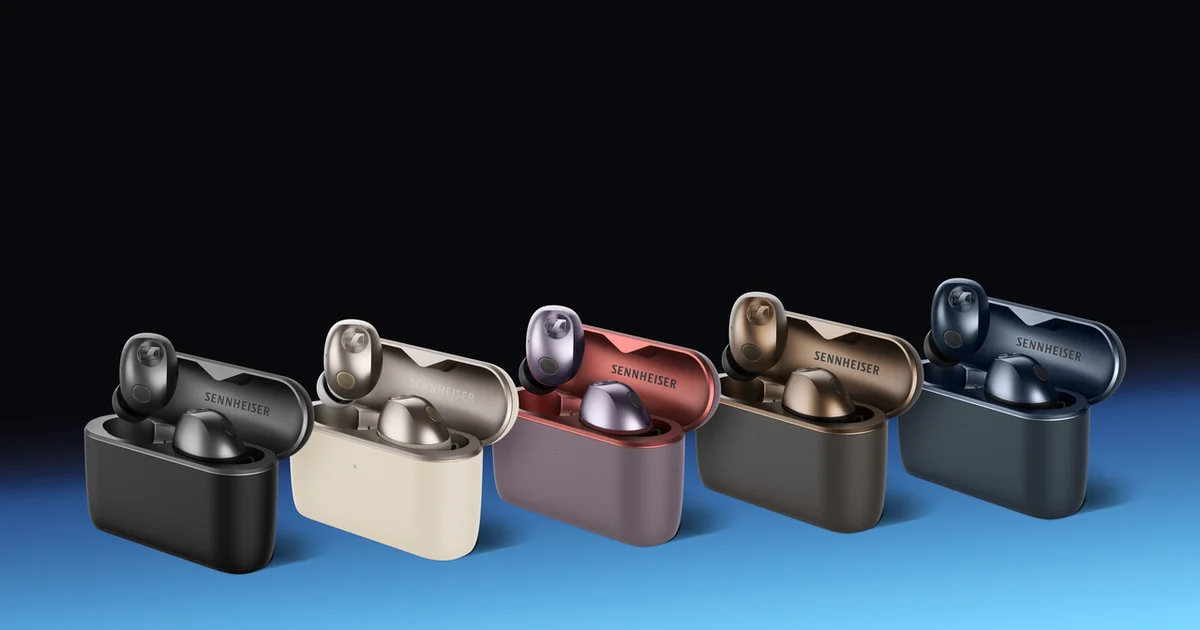
There is a predictable problem hiding inside most wireless earbuds. When they are new, their battery life is impressive. The case fits neatly in a pocket, the connection works quickly and the earbuds can accompany a full day of listening. After enough charging cycles, the tiny batteries begin to lose capacity. Eventually, an otherwise functional pair may become difficult to use because one earbud dies long before the other. The speakers may still work. The microphones may still function. The Bluetooth hardware may remain perfectly serviceable. But replacing the batteries can be so difficult that buying an entirely new pair becomes the only practical option. Sennheiser wants to change that with the Momentum True Wireless 5. Announced in August and available since September 3, 2026, these premium earbuds are attracting fresh attention following TechRadar's October 18 roundup of standout audio products. Their sound quality and active noise cancellation are important. Their most distinctive feature is much less visible. Users can replace the batteries in both earbuds and the charging case, potentially extending the product's useful life beyond the endurance of its original cells.
All three batteries can be replaced
A typical true wireless system contains three separate rechargeable batteries. One sits in the left earbud, another in the right, and a larger battery supplies the charging case. These components age independently. If one earbud loses too much capacity, the whole listening experience becomes compromised. If the case battery deteriorates, users may lose the ability to recharge the earbuds during the day. Sennheiser has therefore provided access to all three cells. The company identifies the replacement parts as BA 501 for the earbuds and BA 502 for the charging case. Its official support documentation says the batteries are intended to be replaceable by end users and will be available in the European Union and selected additional markets. This is a significant difference from products that require specialized service or extensive disassembly. Owners are not necessarily forced to replace the complete earbuds when the original cells wear out. They can install new batteries, provided they follow the instructions and obtain compatible parts. For expensive earbuds that people may want to keep for years, that is an unusually practical design decision.
Replacing the batteries is possible, but not effortless
Sennheiser has published an official replacement tutorial. Each earbud can be opened by loosening small screws with a Phillips PH000 screwdriver. An included opening tool is then used to separate the housing. Once the internal battery is accessible, the user can remove it and insert the appropriate replacement before closing the shell. The charging case has a simpler mechanism. Removing one screw allows a cover to slide open, exposing the battery and a tab that helps lift it from the compartment. The replacement can then be installed and the case closed again. This is a substantial improvement over permanently sealed designs. But it does not make the procedure equivalent to replacing batteries in a television remote. The components are small, and the internal connections require care. SoundGuys warns that users must avoid damaging the ribbon connector when opening an earbud. A mistake could create a problem that did not exist before the battery replacement began. The repair is accessible in principle, but patience and suitable tools remain important.
Independent reviewers found the case easier than the earbuds
The distinction between repairable and easy to repair becomes clear in independent testing. Music Photo Life examined the battery access system during its September review. The reviewer found the charging case relatively straightforward to open. The earbuds were more difficult. Even after loosening the screws, separating the housing proved challenging, and the reviewer noticed a seal beginning to deteriorate during the attempt. That observation does not mean every pair will behave identically. It does demonstrate that miniature electronics remain delicate even when their manufacturer has designed them to be opened. German audio publication Kopfhoerer.de reached a broadly similar conclusion. Replacing the charging-case battery was relatively simple, while working inside the earbuds required greater care. Futurezone also tested the replacement process and emphasized the need for precision. These reports should not overshadow the improvement Sennheiser has made. They establish its limits. The Momentum True Wireless 5 are not fully modular earbuds that can be disassembled casually. They are premium wireless earbuds with an officially supported route to replacing one of their most vulnerable components. That is still a meaningful change for the category.
Long-term endurance matters more than the day-one figure
Sennheiser advertises up to 12 hours of playback from the earbuds and up to 40 hours when the charging case is included. An eight-minute quick charge is also claimed to provide approximately one hour of additional listening. Those are manufacturer figures obtained under specific conditions. Actual results depend on volume, codec selection, active noise cancellation and other settings. A user enabling every advanced feature may not achieve the maximum advertised runtime. But the replaceable-battery design addresses a different question. What happens to endurance several years later? Rechargeable lithium-ion cells gradually degrade. Even if the original battery life was excellent, repeated use may eventually reduce it to an inconvenient level. Replacing a worn-out cell creates the possibility of restoring useful playback time without replacing the entire product. That could reduce electronic waste and long-term ownership costs. However, the financial benefit depends on the price and continued availability of the replacement batteries. No reliable five- or ten-year savings figure can be established simply from the launch announcement. The product creates an opportunity for longer use. Its real-world longevity will become clearer over time.
The audio performance still belongs in the premium category
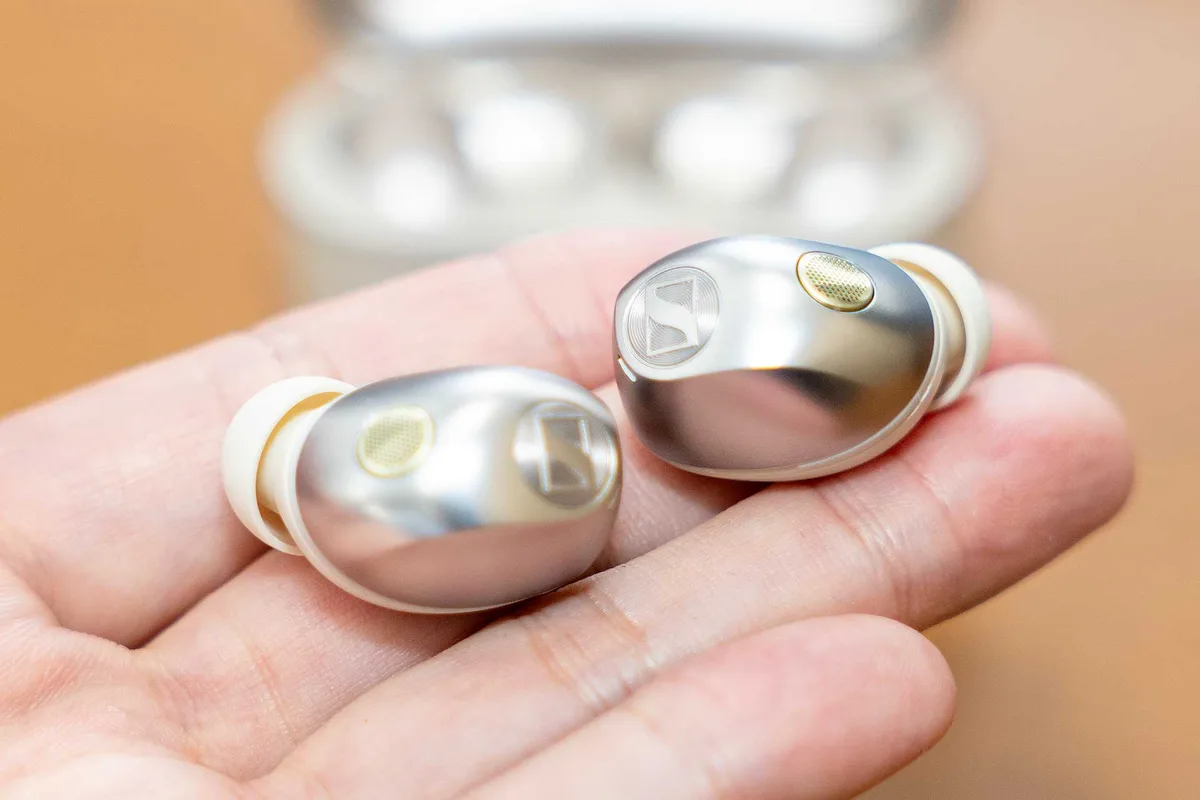
The Momentum True Wireless 5 are not a sustainability experiment built around mediocre sound. They use Sennheiser's 7mm TrueResponse dynamic drivers and offer advanced wireless audio features. Bluetooth 6.0, multipoint connectivity and compatible aptX modes are part of the specification. The Smart Control Plus application includes an eight-band equalizer and sound-personalization options. Headphones.com's September 5 review praised the general quality of the sound, particularly its midrange presentation. The reviewer also reported some concerns about treble. Certain recordings could sound too sharp or sibilant, especially with particular percussion or vocal sounds. Music Photo Life gave a more consistently positive assessment of the tonal balance. Its reviewer appreciated the controlled bass, clear musical detail and flexible equalizer. These views are not necessarily contradictory. Different listeners can recognize the same product's strengths while preferring different sound signatures. Ear anatomy and fit can also change perceived frequency response. The important point is that Sennheiser's repairability feature has not required the company to abandon the audio capabilities expected from premium earbuds.
Noise cancellation is competitive, but fit still matters
The earbuds include adaptive active noise cancellation and a transparency mode. Sennheiser also redesigned the shells and silicone tips to improve fit and passive isolation. The effectiveness of noise cancellation depends partly on that physical seal. Headphones.com found the ANC competitive, particularly against lower-frequency and midrange noise. The transparency mode was also praised for allowing relatively clear awareness of surrounding sounds and the user's own voice. Music Photo Life reported useful noise reduction across common environments. However, no in-ear system produces perfect silence in every situation. Sudden sounds and certain higher frequencies may remain audible. Performance can also vary substantially between users. If an ear tip does not seal correctly, both bass reproduction and noise cancellation may suffer. Finding the correct tip size is therefore essential. Sennheiser provides four sizes, but even that range cannot guarantee a perfect fit for every ear. The Momentum True Wireless 5 perform well in several independent assessments, without becoming an unquestioned leader in every ANC scenario.
One reviewer experienced crackling while walking
Headphones.com's review identified a particularly practical limitation. The reviewer experienced crackling sounds while walking with relatively heavy footsteps, especially when ANC or transparency mode was active. He suspected that movement and vibration affected the seal between the earbud and ear canal. Changing to smaller ear tips reduced the problem, but also weakened the seal and compromised noise cancellation. This was one reviewer's experience, not proof that every owner will encounter the same issue. Still, it matters because walking is a common use for wireless earbuds. A product can feel comfortable while someone is sitting at a desk yet behave differently during exercise or commuting. Trying different ear tips may help. But buyers should ideally assess both stability and sound isolation rather than choosing a size purely on immediate comfort. The issue illustrates why independent testing is valuable. A specification sheet can confirm a feature exists. It cannot establish how that feature will behave for every person during ordinary movement.
Dolby Atmos, multipoint and Bluetooth 6.0 keep the feature set modern
The Momentum True Wireless 5 also provide the technologies expected from premium wireless audio in 2026. Bluetooth 6.0 supports contemporary connectivity features, including multipoint operation with compatible devices. Advanced aptX audio modes are available when the connected source supports them. That compatibility requirement matters. An iPhone and a Snapdragon Sound-compatible Android phone will not necessarily use the same wireless codecs. Dolby Atmos spatial audio with head tracking is another feature, subject to the supported sources and settings. The charging case supports wireless charging. The earbuds also carry an IP54 rating for dust and water splashes under the applicable testing conditions. The range of features demonstrates that replaceable batteries do not have to come at the expense of a modern listening experience. Sennheiser is combining longevity-oriented hardware design with its usual premium audio ambitions. That is arguably more important than introducing repairability in a basic product few enthusiasts would otherwise consider.
Replacement parts are the key to making repairability useful
Opening a product is only one part of repairability. Owners must also be able to obtain the components they need. Sennheiser identifies its replacement cells and says they will be available in the EU and selected markets. That commitment matters. A customer buying the earbuds in 2026 might not need a new battery until several years later. The design will be most valuable if compatible parts remain available when that moment arrives. Pricing will also influence the decision. If replacing three aging batteries costs substantially less than purchasing new earbuds, the repair makes obvious financial sense. If spare parts become expensive or difficult to obtain, the advantage is reduced. Sennheiser recommends using the battery-protection mode in its companion application to help extend the original cells' useful life. That approach is sensible: preserve the existing batteries for as long as practical, then replace them when necessary. But the long-term strength of the system depends on support beyond the product's first year on the market. Actual availability and cost will need to be followed over time.
Replaceable batteries do not make the product indestructible
The design addresses an important source of failure. It does not eliminate every way wireless earbuds can wear out. Drivers can fail. Microphones and charging contacts can be damaged. Moisture, drops and ordinary wear may affect the electronics or housing. Battery access does not automatically mean all those components are designed for end-user repair. Care is also important when closing the earbuds after a replacement. A poorly seated housing or damaged seal could affect their resistance to dust and moisture. The original IP54 rating should not be interpreted as a guarantee that any incorrectly reassembled unit retains identical protection. Sennheiser has therefore made a targeted improvement rather than creating a permanently repairable product. The target is well chosen. Battery degradation is one of the most predictable reasons wireless earbuds eventually become inconvenient. Allowing that component to be replaced gives owners a practical option that many competing designs lack.
At $299.95, longevity becomes part of the premium proposition
The Momentum True Wireless 5 launched at $299.95 in the United States. That is firmly within the premium wireless earbud segment. At this price, consumers reasonably expect strong sound, effective ANC and comfortable everyday use. The independent reviews generally support those qualities, while identifying drawbacks involving fit, treble tuning and occasional noise artifacts. Replaceable batteries introduce an additional consideration that conventional comparisons often overlook. Two products may sound similarly impressive when new but age differently. One may require full replacement when its battery deteriorates. The other may continue functioning after a comparatively simple repair. That difference could affect total ownership cost. The advantage remains conditional on replacement-part pricing, availability and the lifespan of the remaining hardware. Someone who frequently upgrades to the latest earbuds may see little practical benefit. Someone who keeps audio equipment for years may consider it an important reason to choose Sennheiser. Repairability is therefore not an automatic guarantee of good value. It is an option that can make a premium purchase more defensible over time.
The most important audio upgrade may be the one you cannot hear
Wireless earbuds have become substantially more sophisticated. Noise cancellation has improved, connections are more flexible and companion apps offer detailed customization. Yet the category has often remained fundamentally disposable. Tiny batteries age, and products designed around sealed housings can be difficult to keep operating. Sennheiser's Momentum True Wireless 5 demonstrate that premium features and battery replacement can coexist. Independent reviews confirm the practical value of the approach. They also show that replacing an earbud battery is more demanding than accessing the charging-case cell. The true long-term advantage will depend on parts availability, sensible pricing and the durability of the rest of the product. Those questions remain open. But the design changes what owners can reasonably expect. Instead of treating worn-out batteries as the end of an otherwise functional pair of earbuds, they have a defined route to replacing them. The Momentum True Wireless 5 have not proved they will last a decade. They have demonstrated something more immediate: a premium wireless audio product can be designed so its most predictable aging component does not have to determine when the entire device gets thrown away. That is a feature worth paying attention to long after the excitement surrounding new codecs and audio modes has faded.