
 By Kilam

Preserving a Game Means More Than Saving Its Files
Videogame preservation is often associated with old software that modern computers struggle to execute.
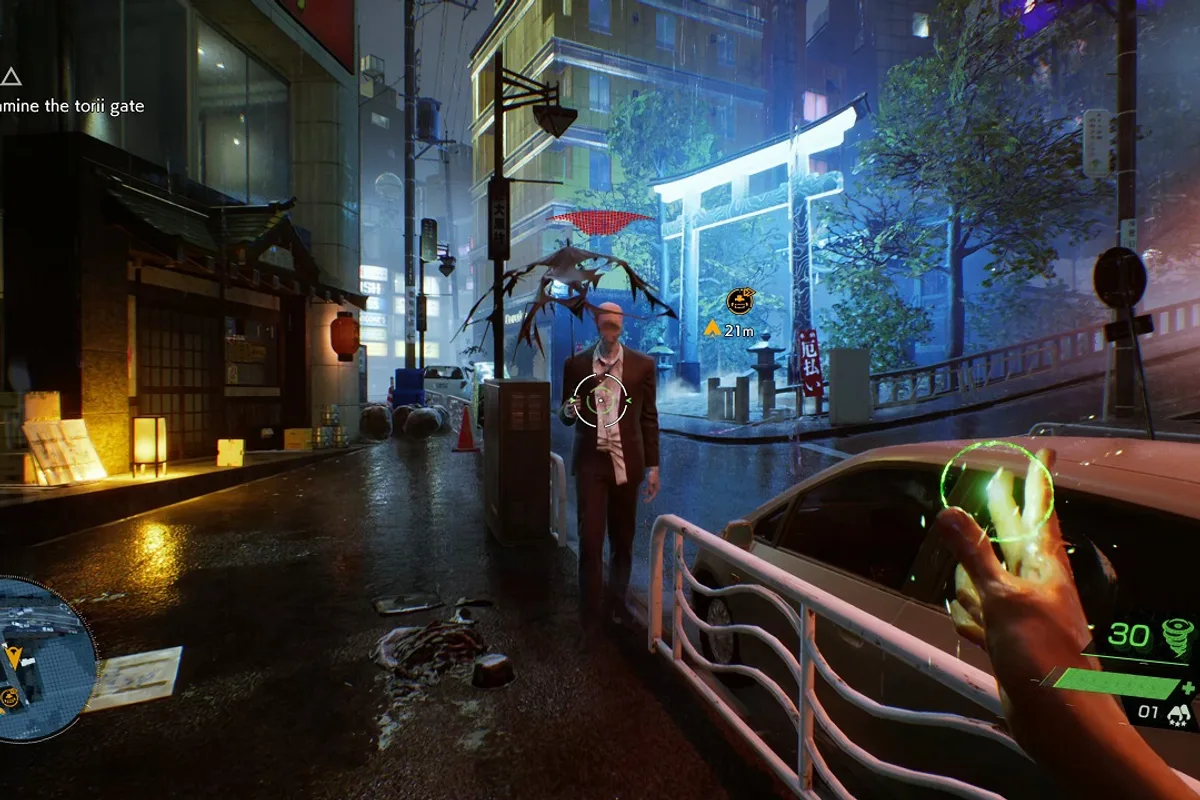
Ghostwire: Tokyo presents a different case.
Originally released in 2022, Tango Gameworks' adventure belongs to a relatively recent generation of PC games.
Yet its inclusion in GOG's Preservation Program demonstrates that software longevity can become a concern long before a game is technically ancient.
Problems do not always originate in graphics engines or hardware drivers.
They may involve accounts, authentication systems, launchers or integrations connected to services whose long-term availability is uncertain.
Removing those dependencies can be as important as fixing rendering bugs.
Exactly What Changed on October 15
GOG has published a changelog that makes it possible to distinguish documented improvements from assumed ones.
First, Bethesda.net integration has been removed.
Second, the Bethesda login dialog no longer appears in the main menu.
Third, the bonus previously associated with signing into Bethesda.net is automatically granted on first launch.
Finally, GOG reports validating stability and verifying compatibility with Windows 10 and Windows 11.
These are the five explicitly documented changes.
They do not constitute a complete rebuild of Tango Gameworks' engine or an announced overhaul of graphics and gameplay systems.
The main improvements concern compatibility and software independence.
Why Account Integrations Can Become Problematic
External account systems can serve several purposes inside games.
They may provide rewards, connect profiles or enable additional features.
However, depending on an external interface can create maintenance problems when the supporting service changes.
An outdated login screen may require additional work even when the rest of the game runs properly.
GOG's release removes that particular source of friction.
It is important not to overstate the change.
GOG has not claimed to eliminate every third-party software component or system dependency.
It has documented the removal of one specific integration, Bethesda.net.
Preserving the Reward Without Preserving Authentication
Account integration sometimes provides rewards intended for registered users.
Simply deleting the system could make those items inaccessible.
GOG has avoided that outcome.
The former Bethesda.net login bonus is now awarded automatically when the game is first launched.
Players retain access to the associated content without needing the authentication mechanism.
This illustrates a useful preservation principle: retain the desired feature while removing the external service that once controlled access to it.
DRM-Free Distribution and Offline Installation
The GOG edition also benefits from DRM-free distribution.
Players can download a standalone installer and keep a local copy.
The game does not require a store client to remain active.
Its single-player campaign can run without a permanent internet connection.
GOG Galaxy remains available for optional functionality, including cloud saves and achievements.
However, the client is not required to start the game.
This offers practical benefits.
Installation files can be kept for later use.
The game can be launched in an offline environment.
Access to the campaign does not depend on repeated authentication with a digital storefront.
This independence should not be confused with an absolute guarantee of future compatibility. New operating systems and hardware may still require updates.
The Preservation Program Addresses That Challenge
The GOG Preservation Program is intended to keep participating games functional on modern systems.
GOG commits to compatibility maintenance and technical support for selected releases.
That goes beyond simply listing a product in a digital storefront.
A store may continue selling software without explicitly promising to maintain it as technology changes.
GOG's program adds a commitment to ongoing work.
However, the preservation objective is not a technically unlimited guarantee across every possible future system.
Compatibility remains an ongoing process.
Why Ghostwire: Tokyo Is an Interesting Example
The game's age may be the most revealing detail.
Ghostwire: Tokyo originally launched in March 2022.
It was not designed for computer hardware that disappeared decades ago.
Its preservation needs include a service integration embedded in its PC experience.
That illustrates a broader issue: modern games can depend on external systems whose lifespans differ from the games themselves.
A game may remain visually impressive and technically functional while account-related components become unnecessary.
Preservation can therefore involve removing software rather than adding more.
Bethesda's Discontinued Launcher Is Only Part of the Context
Bethesda discontinued its Bethesda.net launcher in May 2022 and offered a migration process to Steam.
However, Bethesda.net encompassed several different services.
Accounts, interfaces and in-game integrations were not necessarily discontinued simultaneously.
That makes the exact wording of GOG's announcement important.
The platform confirms removal of the integration within Ghostwire: Tokyo.
It does not claim that all Bethesda.net services have been eliminated across the publisher's catalog.
This Is Not a Graphics Optimization Update
The changelog does not claim any measured frame-rate improvement.
It does not announce additional ray tracing modes, changes to internal resolution or new image reconstruction technology.
It does document stability validation and compatibility verification on Windows 10 and Windows 11.
That distinction prevents a maintenance release from being mistaken for a performance upgrade.
Players who already own Ghostwire: Tokyo on another storefront should not assume that their existing hardware will run this edition faster.
The documented advantages are primarily distribution independence and the removal of Bethesda.net integration.
Denuvo Had Already Been Removed
Ghostwire: Tokyo also underwent earlier changes involving Denuvo.
The protection was added to a PC version and subsequently removed.
The GOG launch should therefore not be described as its first-ever removal.
The significant development in 2026 is the combination of DRM-free distribution, offline installation and elimination of an external account integration.
These improvements may be less visually impressive than a new renderer, but their benefits can extend well beyond a conventional graphics patch.
Preservation Also Protects Existing Content
Ghostwire: Tokyo received the free Spider's Thread update in 2023.
It introduced additional environments, combat abilities and a roguelite mode.
Those features already formed part of the game's development history.
GOG's announcement does not introduce a new story campaign created for its storefront.
Preservation and expansion are different activities.
The former aims to maintain access to an existing experience, while the latter adds new content.
Oblivion Demonstrates a Different Kind of Maintenance
The same announcement also introduced The Elder Scrolls IV: Oblivion – Game of the Year Edition Deluxe to the program.
GOG documented another set of technical improvements for that older title.
Its changes concern modern controllers, localization, a memory leak and Alt+Tab behavior.
The comparison demonstrates that preservation is not a single standardized patch.
One game may require hardware compatibility fixes.
Another may benefit from removing a legacy service integration.
The appropriate work depends on each game's actual problems.
Long-Term PC Gaming Depends on Software Independence
Ghostwire: Tokyo illustrates that a videogame is an interconnected collection of software components and dependencies.
The engine, assets, operating system, copy protection and external services all evolve on different schedules.
If one component becomes problematic, the experience may deteriorate even when the rest of the game still functions.
Effective preservation therefore requires more than keeping a copy of the original files.
It also requires maintaining the ability to execute them reliably.
With this new release, GOG removes a documented dependency, verifies compatibility on Windows 10 and 11, and adds the title to a maintenance program.
No graphics revolution has been announced, and no new narrative chapter has appeared.
Instead, the game receives something potentially more durable: an edition that relies less heavily on infrastructure outside the game itself.
For a single-player adventure released in 2022, that is a modest but meaningful technical achievement.