
 By Tsuky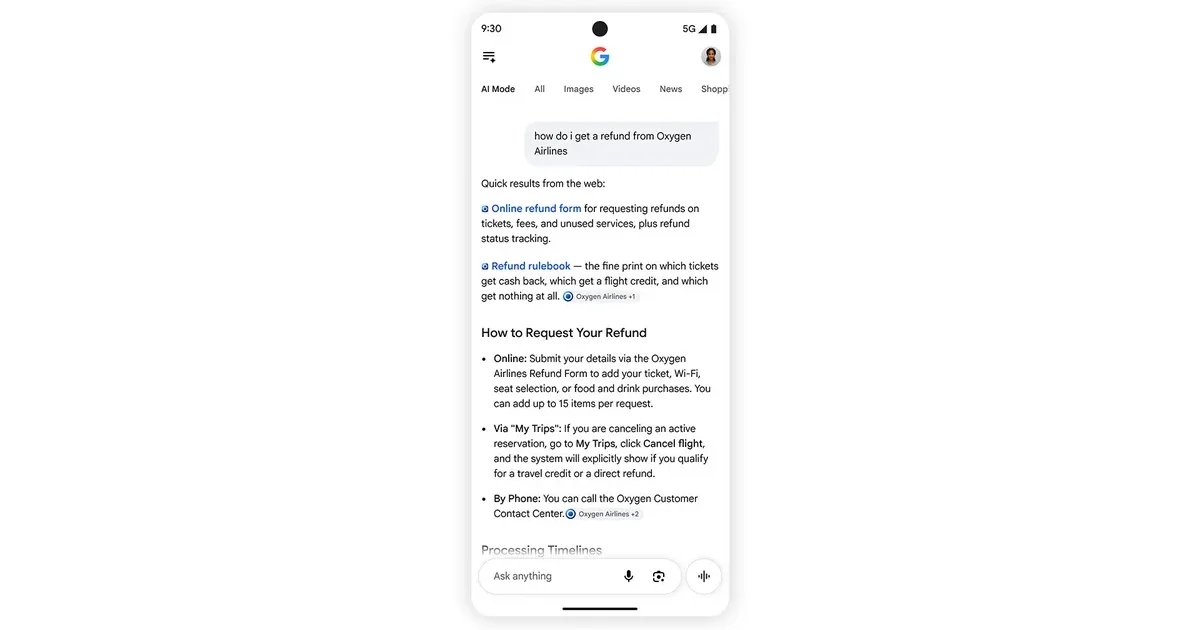
Google has built its search business around helping people find information published elsewhere. Generative AI changes that relationship because Search can increasingly deliver the information itself.
A user comparing products, researching a technical issue or looking for background on a news event may receive a substantial AI-generated explanation before opening any outside page. This can make searching faster. It can also reduce the need to visit the websites whose reporting, analysis or documentation provides the underlying material.
The tension is particularly significant for organizations that depend on referral traffic. Producing original reporting, maintaining technical guides and running independent product tests requires investment. If that work contributes to search answers without attracting readers, the economics of publishing can become more difficult.
On October 15, 2026, Google outlined several adjustments to AI Mode and AI Overviews. They are intended to make external sources easier to discover, place important links closer to the information they support and offer more engaging ways to explore related material.
The announcement establishes a clear product direction. It does not establish that publishers will receive more traffic as a result.
Google wants source links closer to the actual answer
The most immediate change concerns inline links within AI-generated responses.
Google says it has substantially increased their presence and is adjusting the interface so links appear higher in responses more frequently. Instead of requiring users to reach a separate group of references, the search experience can present a relevant link alongside the information being discussed.
Placement matters because users do not necessarily read an AI answer from beginning to end. Someone searching for a particular procedure may stop as soon as the answer appears sufficient. A source link positioned near that explanation has a better opportunity to be noticed than one buried beneath several additional paragraphs.
There is also a verification benefit. When claims are accompanied by accessible references, readers can inspect the original context, evaluate its authority and identify details that may have been lost in summarization.
That does not mean the underlying AI response is automatically correct. A prominently displayed citation can still point to material that does not support every claim in the surrounding text. Link placement improves access to sources; it is not a substitute for accuracy.
Google has not provided a public measurement in this announcement demonstrating how much additional outbound traffic the updated inline links generate.
An official website shortcut for certain searches
Another experiment targets a familiar problem with conversational search: sometimes the user does not need an explanation so much as the correct destination.
Google plans to test a section near the top of certain AI responses highlighting one or two official websites suited to the task. The links will include context about why those destinations are useful.
For example, the underlying idea could be relevant to searches involving official services, documentation or administrative procedures. An AI explanation might help users understand what to do, but the task itself may require visiting a particular website.
This approach acknowledges that not every useful search result can be replaced with generated prose. Some sites provide forms, authenticated services, authoritative documents or interactive tools that users need to access directly.
The feature is being tested rather than universally deployed. Google has not published an exhaustive set of eligible search categories or confirmed that every user will see it.
The selection process also deserves attention. Prominently recommending one or two destinations can help users avoid confusion, but it places considerable importance on the system's judgment about which sources are genuinely appropriate.
News publishers gain more visual real estate
Google is expanding article carousels for timely topics across additional countries and languages.
These modules offer a different route into news coverage from a conventional AI summary. Instead of treating multiple articles merely as material to synthesize, a carousel can present the publications themselves as destinations worth exploring.
The expanded carousels will also incorporate Preferred Sources, Google's feature allowing people to identify publications they especially want to encounter in Search.
According to the company, the number of people who have used Preferred Sources has increased more than sevenfold since the beginning of 2026.
That is an adoption statistic. It does not establish a sevenfold increase in traffic for the selected publications, nor does it indicate a comparable change in subscription revenue or advertising income.
The feature nevertheless suggests that publisher identity retains value even when much of the information is presented through AI.
A reader who follows a particular technology publication may prefer its testing methodology and editorial standards over an anonymous summary. A news consumer may want multiple independently reported perspectives rather than a single synthesized answer.
Making those preferences visible in Search can help preserve the relationship between a publication and its audience. It may also favor established brands that users already recognize, leaving smaller publishers to work harder to build that recognition.
Related articles become more inviting
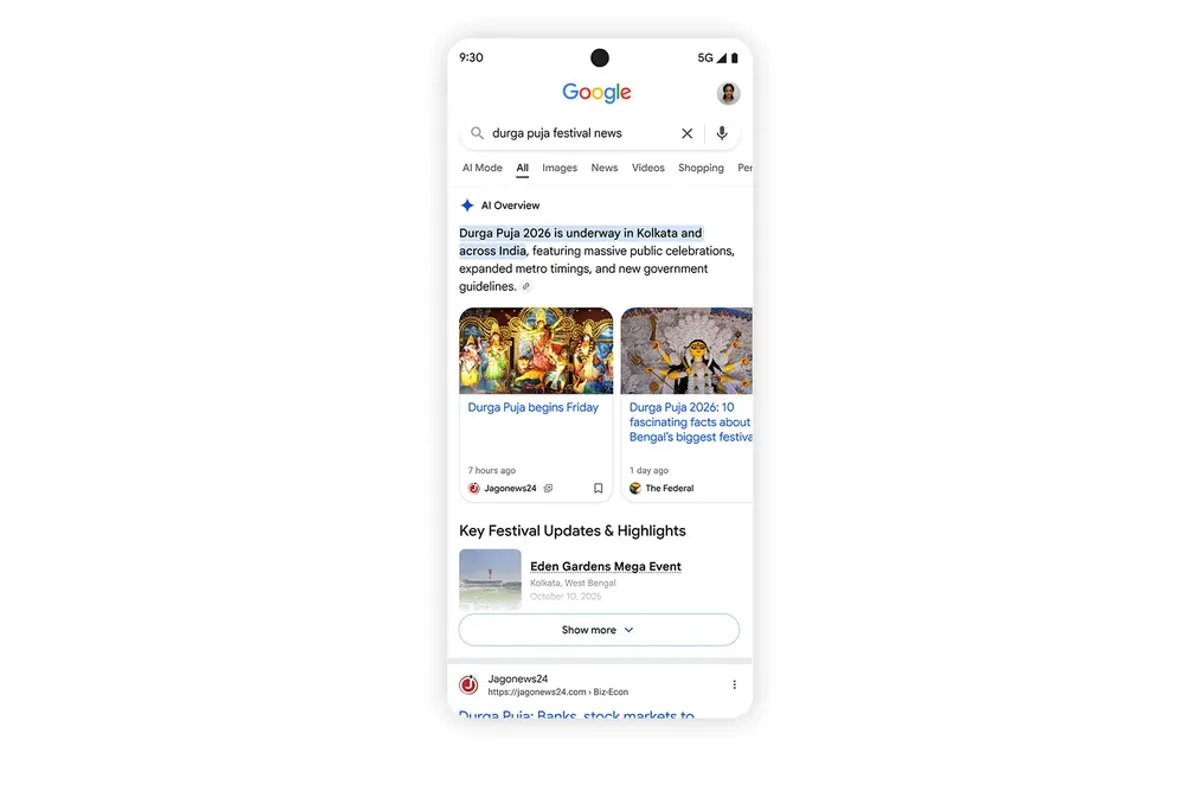
Google is also redesigning some links that appear after an AI response.
The updated presentation incorporates image thumbnails and more prominent clickable elements, giving related articles a stronger visual identity.
This may sound like a modest interface adjustment, but presentation influences how users perceive the choices available to them. A plain reference can look like supporting metadata. An article card with an image is more recognizable as content that offers additional value.
For publishers, that distinction could matter when the original work contains material a summary cannot fully preserve: interviews, investigative detail, original photography, technical measurements or extended explanations.
A synthesized answer is often a useful starting point. It is not necessarily a replacement for a substantial report or a carefully maintained reference.
Of course, attractive cards will not solve the problem if they point to irrelevant, repetitive or low-quality pages. The quality of link selection matters at least as much as its visual treatment.
Creator profiles reveal a different kind of trade-off
Google has begun experimenting with clickable creator and publisher names on video results within AI Mode.
Selecting a name leads to a Google Search profile that provides more context about the creator and their work.
This could make attribution clearer and help users discover more content from a particular publisher. It may also encourage recognition of individual creators rather than treating each video as an isolated result.
Yet this feature highlights an important limitation of the broader initiative. Clicking a creator's name does not necessarily take the user directly to the creator's own website. The destination in this experiment is another Google-hosted page.
That may improve discovery while still keeping the initial interaction inside Google's ecosystem.
The profile feature is in testing, and its long-term reach is not yet established. It should not be described as a fully available tool for every creator or publisher.
The problem Google needs to solve is structural
The debate about AI search referrals is sometimes framed as a simple conflict between technology companies and news organizations. The relationship is more complicated.
Google benefits from making Search increasingly useful. Direct answers can save users time and help the company compete with AI assistants that offer conversational access to information.
At the same time, Google's services depend on a web that continues to produce original material.
A model can summarize an investigation, but that investigation still requires someone to conduct interviews and verify evidence. An AI overview can describe a product's performance, but independent testing requires equipment, expertise and time. Technical documentation must be written and updated as software changes.
If organizations cannot sustain those activities, the quality and diversity of information available online may suffer.
Google therefore has an incentive to keep the wider publishing ecosystem viable, even as its products become more capable of answering questions without external navigation.
The October updates can be understood as an attempt to manage both objectives: provide a convenient AI-first search experience while preserving meaningful routes to the content that makes that experience valuable.
The missing measurement is outbound traffic
Search Engine Roundtable's Barry Schwartz has highlighted the central weakness in Google's presentation of these changes: publishers need clearer information about actual clicks.
The distinction between being displayed and being visited is fundamental.
An article could receive more prominent exposure in AI Mode while generating relatively few visits if the searcher's question has already been answered. Conversely, a well-placed link to specialized documentation could attract highly engaged readers who need more information than the summary provides.
Different searches are likely to produce different outcomes. A short factual query may give users little reason to leave Google. A complex purchase decision or a research-intensive question could create a stronger incentive to inspect multiple sources.
Without appropriate measurements, publishers cannot reliably determine which effects result from interface changes and which reflect shifts in user behavior.
Google's announcement does not offer independent evidence of a measurable increase in publisher referrals attributable to the new designs.
The company may have reasons to expect the changes to help. But an expectation is not the same as a demonstrated traffic recovery.
A separate licensing effort now includes more than 400 publications
Google also used October 15 to announce an expansion of its News AI pilot program.
More than 400 publications worldwide are now participating, with CNN, Axios and the Financial Times among the newly named partners.
The program compensates participating publishers for the delivery and use of enhanced content in the development of certain AI experiences. Google has identified examples including detailed article overviews on Google News publisher pages and customizable audio briefings.
Reuters reported on the new agreements and their connection to the growing debate over content licensing and AI-generated information.
These commercial partnerships should not be confused with the interface changes to ordinary Search.
A publisher appearing as a source in an AI Overview is not automatically part of the paid News AI program. Nor do the disclosed partnerships establish that every publisher receives compensation for its content appearing in AI-generated answers.
Financial terms for individual agreements have not been publicly detailed in the reviewed announcements, making it impossible to calculate average payments or compare them directly with lost referral revenue.
The two initiatives address related but distinct issues. Better links may help users reach original articles. Licensing arrangements can compensate specific organizations for defined forms of content use. Neither approach alone guarantees the financial sustainability of digital publishing.
Search optimization faces a more fragmented landscape
For website operators, the practical challenge is that search visibility is no longer represented by a single familiar ranking position.
An AI result can mention a brand, cite a publication, present a prominent official link, display a carousel or offer a related article card. Those placements do not necessarily produce the same user behavior.
Traditional search-engine optimization metrics remain useful, but they provide an incomplete picture of how people encounter information in AI-powered search.
Publishers increasingly need to distinguish between the visibility of their work, recognition of their identity and actual visits to their websites.
There is no evidence in this announcement of a universal technical trick that guarantees placement in AI Mode. Accessible, accurate and distinctive material remains important, but Google ultimately controls how the interface selects and presents external sources.
The more useful editorial question may be what a publication offers that cannot be fully consumed through an automatically generated summary.
Original reporting, detailed methodology, constantly updated reference material and useful interactive services give readers reasons to visit the source itself.
A visible link is a beginning, not an economic outcome
Google's latest adjustments are meaningful because they address a weakness of answer-first search: the risk that the websites providing information become difficult to discover from the resulting response.
For users, clearer source links can make verification and deeper research more convenient. For publishers, more prominent placement creates an opportunity to recover attention, but not proof that this opportunity will turn into revenue or traffic.
The next important evidence will come from deployment data, user behavior and sufficiently detailed reporting on outbound visits.
Google is trying to establish that AI-powered Search can still serve as an entry point to the wider web rather than a self-contained replacement for it.
The redesigned links make that ambition more visible. Whether readers actually follow them remains the unanswered question.