
 By Adri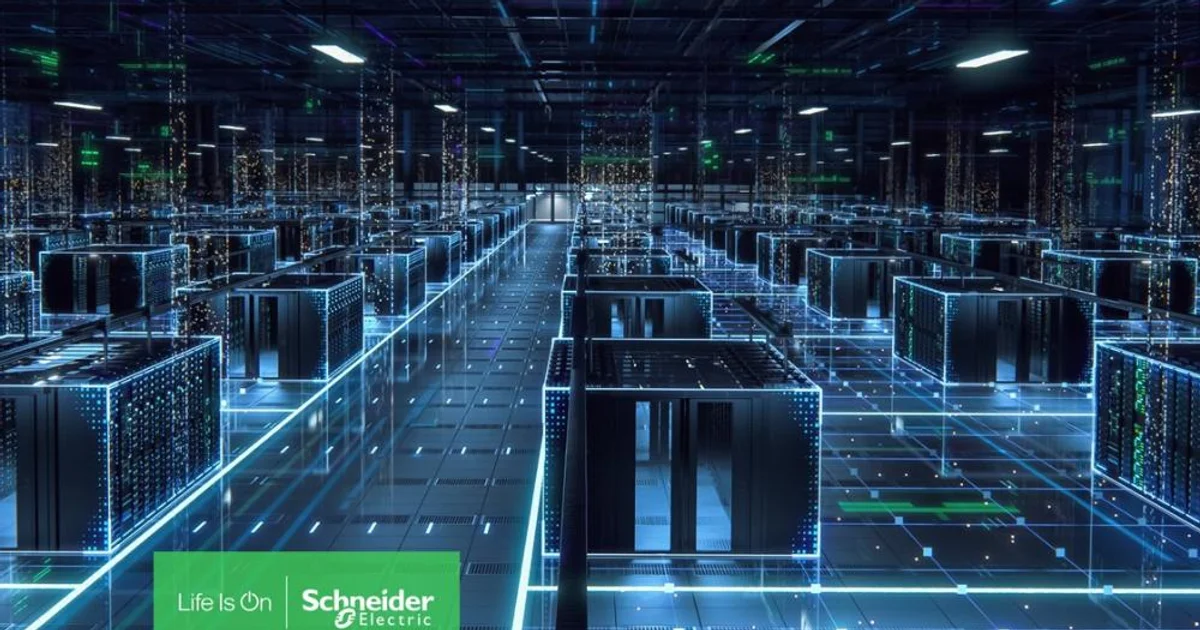
The AI industry's spending spree is often described through purchases of Nvidia accelerators or the enormous budgets of cloud providers. Schneider Electric's latest results offer a different view of where the money is going.
Before a new computing cluster can generate a single token, its operator must provide reliable electrical infrastructure, protection against power interruptions and a thermal system capable of removing the heat produced by the servers.
Schneider supplies much of the equipment required to address those problems.
On October 16, 2026, the French group reported third-quarter revenue of €11.46 billion, a company record. Sales increased 17.9 percent on a reported basis and 16.9 percent organically from the corresponding period a year earlier.
The result exceeded the company-compiled analyst consensus of approximately €11.13 billion reported by Reuters.
Management also raised its annual revenue and profit-growth targets for the second time this year. Data-center demand is the principal reason, with the company reporting triple-digit demand growth in that market during the quarter.
The data-center business is transforming an electrical equipment supplier
Schneider Electric has long been associated with circuit breakers, electrical distribution and industrial automation.
Those activities remain essential, but the company's position in modern computing infrastructure gives them a different economic importance.
A large AI installation requires equipment for managing incoming power, distributing it to racks and keeping systems operating when parts of the electrical supply fail.
It also needs cooling, monitoring, automation and maintenance services. Some customers prefer prefabricated electrical and infrastructure modules that can be integrated into a project without assembling every component on-site.
Schneider says its data-center business benefited from strong demand for prefabricated solutions, three-phase uninterruptible power supplies, electrical distribution and protection, and cooling.
Those categories are not optional extras for large computing facilities. They are part of the infrastructure required to turn installed processors into an operational service.
As AI systems become more densely packed, the importance of power management increases. An organization may have access to advanced GPUs but still be unable to deploy them without enough electrical and cooling capacity.
The financial performance is broader than one product category
Energy Management generated €9.62 billion in quarterly revenue, growing by approximately 19 percent organically.
Industrial Automation also grew, although at a slower rate of around 8 percent organically.
The company's business-model breakdown provides additional detail. Products accounted for 48 percent of third-quarter revenue and grew 17 percent organically. Systems represented 35 percent and expanded 22 percent.
Software and Services contributed the remaining 17 percent, with 7 percent organic growth.
The strong performance of systems is particularly relevant to the data-center expansion. Building a new campus often requires coordinated electrical, cooling and infrastructure products rather than individual items purchased independently.
Schneider says its product growth was supported largely by volume increases, with pricing improvements also contributing. That makes the quarter more significant than one driven solely by higher selling prices.
The figures do not mean every Schneider business is growing at the same pace. They show particularly strong demand in activities exposed to electrical infrastructure and large integrated installations.
Triple-digit demand growth needs careful interpretation
Schneider's most striking data-center figure is its report of triple-digit demand growth in the third quarter.
That signals an increase of at least 100 percent in the relevant demand measure, but it is not equivalent to saying the company's total revenue doubled.
Orders and recognized sales are different financial events. Data-center equipment can be ordered in advance of construction, delivered across multiple project phases and recognized as revenue according to the underlying contracts and accounting requirements.
The company reported another record backlog at the end of the quarter, supporting management's confidence in demand extending into 2027 and 2028.
That visibility is valuable, but it does not turn future projects into completed sales.
Cloud operators may revise construction schedules because of power availability, financing conditions, permitting delays or changes in their own technology strategies.
Investors will therefore need to follow not only new demand but also how effectively Schneider converts its backlog into delivered systems and revenue.
The fastest regional growth came from Asia
US hyperscalers remain major customers for data-center infrastructure, but North America did not lead Schneider's reported regional growth during the third quarter.
China and East Asia delivered 26 percent organic growth, compared with 20 percent in North America.
Schneider says data centers contributed significantly to the Asian performance, including demand from major digital businesses and regional colocation providers.
The geographic mix matters because AI infrastructure is not exclusively a US construction story.
Large domestic technology companies and cloud providers in different markets also need electrical and thermal infrastructure as their computing requirements grow.
However, the regional percentages refer to Schneider's broader sales, not exclusively to AI data-center revenue. They should not be used as a direct comparison of AI spending between countries.
Schneider lifts its 2026 outlook again
The group now expects full-year organic revenue growth of 12 to 14 percent, up from its previous range of 10 to 13 percent.
Its forecast for organic growth in adjusted EBITA has increased to 18 to 21 percent, compared with the earlier range of 14 to 19 percent.
Schneider also expects an organic improvement in its adjusted EBITA margin of 100 to 120 basis points.
These revised targets indicate that management expects the combination of volume growth, pricing and operating performance to support profitability as well as revenue.
They are forecasts, not reported full-year results. The company has raised its expectations on the strength of its recent trading and order book, but the remaining months of the year still need to be completed.
The distinction is important in a market where infrastructure companies can be valued on assumptions about several years of future AI spending.
Power and cooling are becoming competitive constraints
The physical design of AI systems is changing the demands placed on data centers.
More capable accelerators can also increase power density. As more computing hardware is concentrated in each rack, operators need to reassess electrical distribution and heat removal.
Traditional air cooling remains useful for many installations, but particularly dense configurations are encouraging wider consideration of liquid-cooling systems.
Schneider is expanding its offering through Motivair, including coolant distribution technology intended to support hybrid air- and liquid-cooled environments.
The company introduced a new coolant distribution unit in September designed for such configurations, illustrating how suppliers are adapting their equipment to evolving data-center requirements.
There is no single cooling solution suitable for every facility. Operators must account for server density, local energy costs, installation design and maintenance requirements.
Nevertheless, the growing importance of these systems helps explain why companies supplying electrical and thermal infrastructure can benefit from increased AI computing demand without developing an AI model themselves.
Schneider wants a larger software business too
Hardware remains central to Schneider's financial performance, but management is also pursuing a broader industrial software strategy.
On October 5, the company announced a definitive agreement to acquire US engineering software developer PTC in a transaction valued at approximately $22.6 billion.
The proposed acquisition would add capabilities in product design and lifecycle management to Schneider's existing activities, including AVEVA, ETAP and RIB Software.
The strategic objective is to connect information about products, industrial operations and energy systems.
That direction is relevant to data centers, where operating costs depend partly on monitoring energy consumption, equipment performance and cooling efficiency.
Combining infrastructure data with software-based analysis can help operators identify inefficiencies and support maintenance decisions.
But the PTC agreement should not be treated as an integration already completed, and no contribution from a future combination should be assumed in the reported third-quarter numbers.
The immediate result is a clear indication of Schneider's direction: the company wants to supply both the physical systems that run industrial infrastructure and the software used to manage them.
Why the AI boom still carries risks for suppliers
The strong growth reported by Schneider does not settle the broader question of whether AI capital expenditure is sustainable.
Cloud providers are making large commitments to infrastructure in anticipation of continuing demand for AI services.
Equipment suppliers can benefit from those projects before the eventual revenue generated by the computing systems is fully established.
If major customers revise their investment plans, spending on power distribution and cooling could also slow.
Schneider has some protection through its diversified operations in buildings, industrial automation, electrical infrastructure and services. The need to maintain and modernize existing equipment also continues independently of new AI campuses.
However, diversification does not make the company immune to a sharp change in data-center investment.
Its current backlog provides visibility, but the durability of the cycle will depend on project execution and the economics of the cloud and AI services driving construction.
The AI industry's industrial winners are not always chipmakers
Schneider's third-quarter results highlight an important feature of the current technology investment cycle.
AI progress is often measured through model capabilities and computing performance, but deploying those capabilities at scale requires electrical engineering, manufacturing and physical infrastructure.
Schneider sells equipment that is largely independent of which model a customer runs or which accelerator architecture it selects.
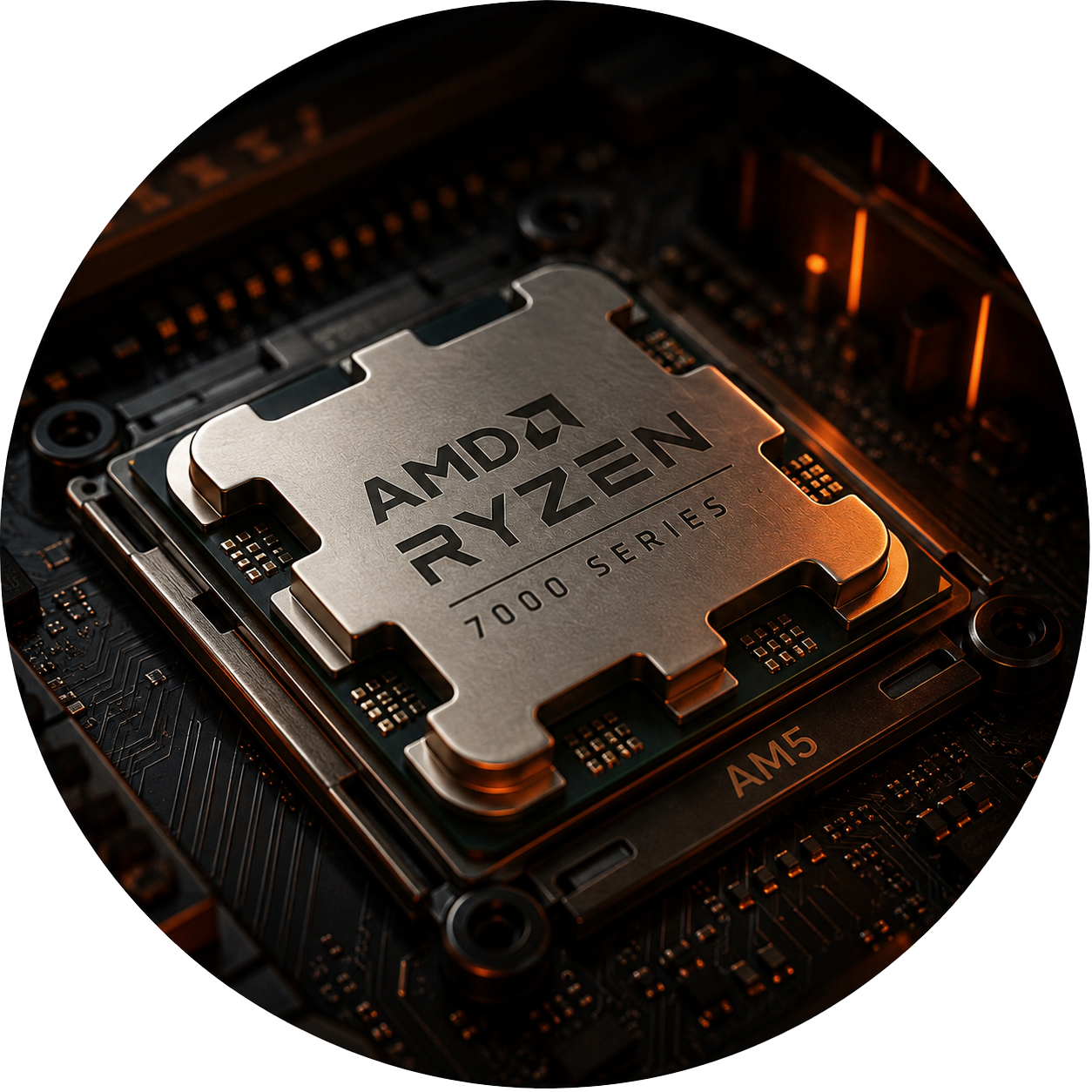
A data center built around Nvidia GPUs, AMD accelerators or a cloud provider's custom silicon will still require reliable power and thermal management.
That makes Schneider a participant in the growth of AI infrastructure without requiring it to win the competition between chip architectures.
The company's record sales and revised outlook suggest that demand for these less visible components is currently accelerating alongside spending on computing hardware.
Its next challenge is execution: delivering enough equipment, maintaining profitability and adapting to facilities whose power requirements continue to evolve.
The broader lesson is straightforward. Advanced chips may attract the headlines, but the ability to power and cool them is becoming one of the defining constraints of AI expansion.