
 By Tsuky
The Underlying Problem Was Data Organization
Adding new achievements to a Steam game could previously change the overall completion percentage shown to players.
That became especially problematic for games receiving content over several years.
Expansions, seasons, modes and temporary events could all contribute to a single growing collection.
The overall percentage did not necessarily reflect the content each individual player could actually access.
Achievement Sets introduce a different structure.
They organize achievements into named collections with independent completion tracking and optional access restrictions.
That makes separating the original game from additional content much easier.
Every Game Has a Base Game Set
Steamworks documentation specifies a Base Game set for every title.
Achievements not assigned to another collection automatically belong to this default set.
Developers can therefore retain conventional behavior without creating additional categories.
The Base Game set cannot be renamed, deleted or reordered.
Studios can then add custom collections as needed.
This allows gradual adoption without requiring every developer to design an elaborate achievement hierarchy.
DLC Ownership Can Determine Achievement Access
One of the system's most important features is linking collections to downloadable content.
Developers can associate a set with ownership of a particular DLC.
Steam can then distinguish achievements available to a player from those requiring content the player does not own.
This prevents additional-content achievements from automatically influencing completion for someone without access to that content.
The change goes beyond adding visual headings to an existing list.
Achievement progression can now reflect content ownership.
However, developers must correctly associate their achievements with the relevant sets and DLC packages.
Existing Achievement APIs Remain in Use
This is an important detail for development teams.
Valve says Achievement Sets are configured through Steamworks.
Organizing existing achievements into sets does not require dedicated new game code.
Games continue unlocking achievements through established Steamworks mechanisms.
The new organization primarily affects configuration and presentation.
This can simplify adoption for already released games.
However, migration is not necessarily instantaneous.
Developers still need to define appropriate collections, verify their contents and make sure access restrictions match their games.
Valve Has Rebuilt the Achievement Editor
Achievement administration is receiving a substantial update.
The new Steamworks editor supports bulk importing and exporting achievement definitions, set assignments and localization.
Studios can use CSV files and image assets to update many elements at once.
A bulk-move function also allows multiple achievements to be transferred between sets.
Valve has introduced automatic grayscale generation for locked achievement icons.
The editor can identify missing translations.
These tools directly affect maintenance workflows by reducing repetitive manual configuration.
Developer-Only Sets Support Internal Testing
Studios can now create achievement sets visible only to their development teams.
They can use these collections to test unlock conditions, review names and icons, and check localization before publication.
Separating internal tests from public presentation is particularly valuable for games receiving frequent updates.
Developers can prepare achievements for upcoming content without immediately displaying them to players.
However, Valve has not described this capability as a universal anti-leak protection system.
It is a development-management feature rather than a guarantee that every piece of information remains inaccessible.
Archiving Addresses a Long-Term Live-Service Problem
Achievement archiving may become one of the most useful additions.
Games featuring recurring events often contain objectives that eventually become impossible to complete.
Leaving those objectives inside the required progression creates a contradiction: players are expected to unlock achievements that are no longer obtainable.
The new system allows developers to archive unavailable achievements or entire collections.
Players who earned them retain recognition, while those who missed the events are no longer blocked by them.
This separates historical accomplishments from currently available objectives.
However, archiving is not automatically applied to every older Steam game.
Developers must identify obsolete achievements and use the new tools appropriately.
Progress Tracking Reflects Available Content
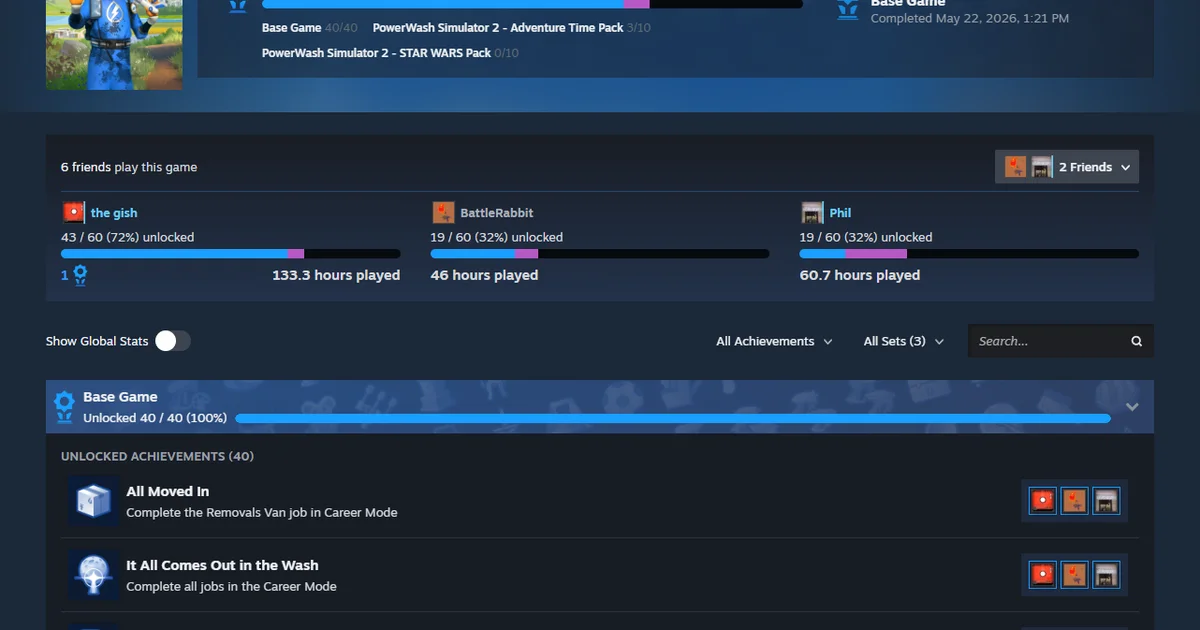
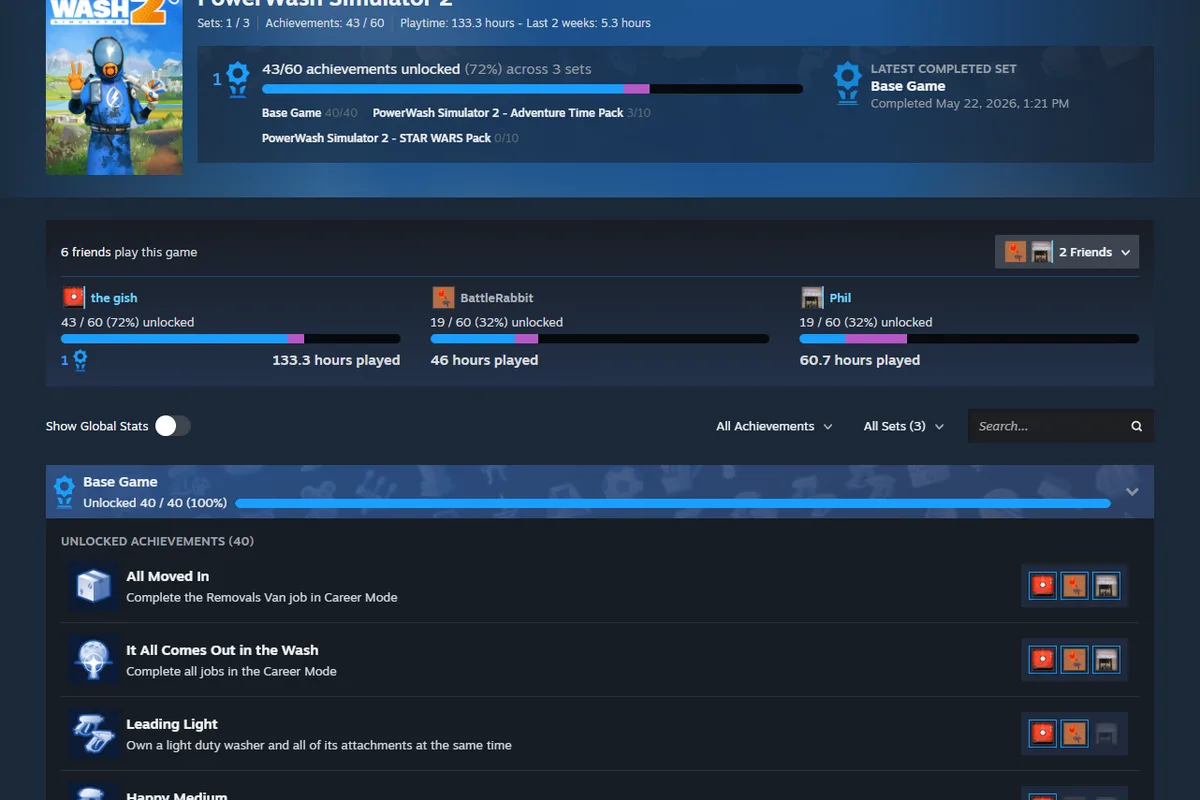
Valve is also introducing a redesigned achievements page.
It combines collection progress, individual achievement details and global statistics.
Search and filtering options allow players to focus on relevant goals.
They can also compare achievements with up to three friends.
The total number of accessible achievements may differ between players depending on DLC ownership.
A simple raw total therefore does not necessarily represent an equivalent challenge for everyone.
The updated interface takes those differences into account.
Steam Profiles Are Adopting the New Structure
The Perfect Games section is being renamed Completed.
It will include completed games as well as titles with completed achievement sets.
Finished collections can also be displayed through profile showcases.
Valve is changing how the platform represents player accomplishments.
Rather than relying only on a single game's overall status, Steam can recognize multiple kinds of completion.
That better reflects games which continue expanding after their original releases.
Adoption Remains in Beta
There is still an important distinction between technical availability and universal adoption.
The developer tools can already be used, while the updated player interface remains in the Steam client beta.
Valve lists several participating titles, including Portal 2, Team Fortress 2, Forza Horizon 5 and Crusader Kings III.
That demonstrates the system can support existing games across multiple genres.
However, Valve has not announced mandatory adoption.
Each studio must decide how to configure its achievements.
A definitive stable-client release date has not been confirmed.
A Subtle but Significant PC Platform Change
Achievement Sets do not improve game-engine performance or introduce new gameplay systems.
Their value lies in better organization, easier maintenance and progression tracking that more accurately reflects available content.
For players, that means greater clarity.
For developers, it means more flexible tools for supporting expansions and recurring events.
The update responds to a structural change in videogames: titles remain active longer, while their progression systems need to evolve without erasing recognition of previous accomplishments.
Valve now has a technical solution for that problem.
The remaining question is how many studios will adopt it and whether the process will become straightforward enough to establish a new Steam standard.