
 By Adri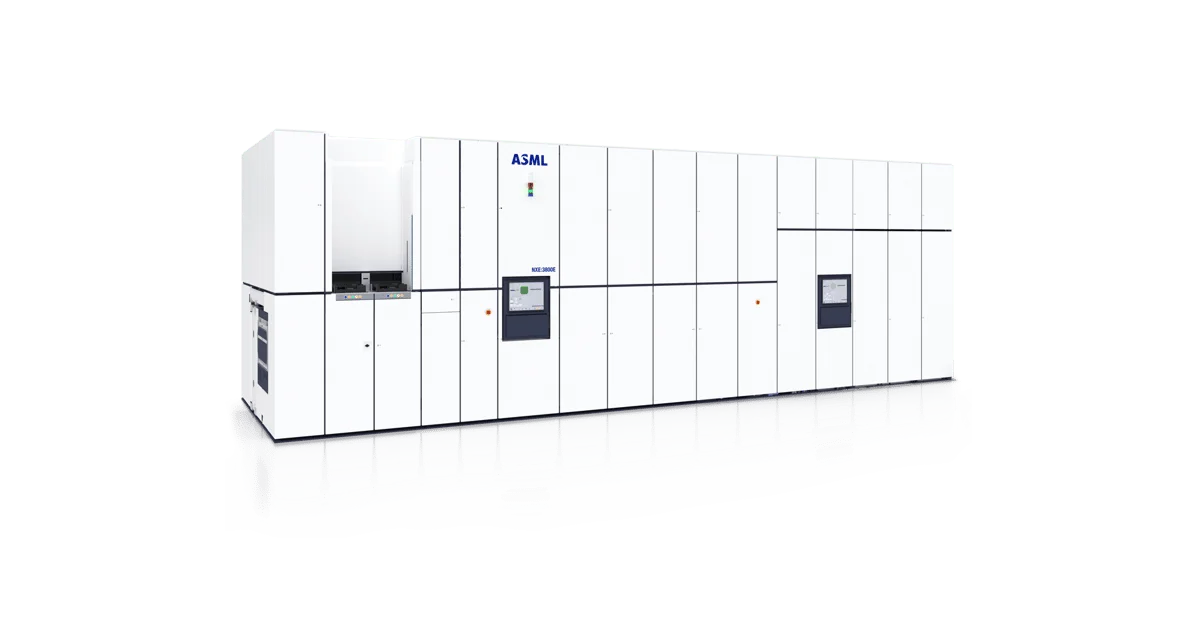
The semiconductor industry can announce ambitious manufacturing projects faster than it can equip them. Building a new fabrication facility requires far more than capital and floor space. The factory needs highly specialized machinery, and some of the most critical systems come from a single European supplier.
ASML's latest warning makes that dependency unusually visible. In its third-quarter results released on October 14, 2026, the Dutch company said that its currently planned supply for 2027 and 2028 would not fully meet the demand anticipated by customers. Reuters examined the implications the following day, as investors weighed booming orders against the practical difficulty of increasing output.
This is not a declaration that the industry has run out of chips. Nor does it mean every foundry will have to postpone construction. ASML is describing a forward-looking mismatch between projected equipment demand and the manufacturing capacity it has planned. For businesses committing billions of dollars to fabrication plants years before they begin producing chips, that distinction is consequential.
A crucial supplier that operates before the chipmakers
Most people encounter the semiconductor industry through companies such as Nvidia, AMD, Intel or TSMC. The final products carry recognizable names, and their specifications are easy to compare. Lithography equipment is less visible, even though advanced manufacturing would be impossible without it.
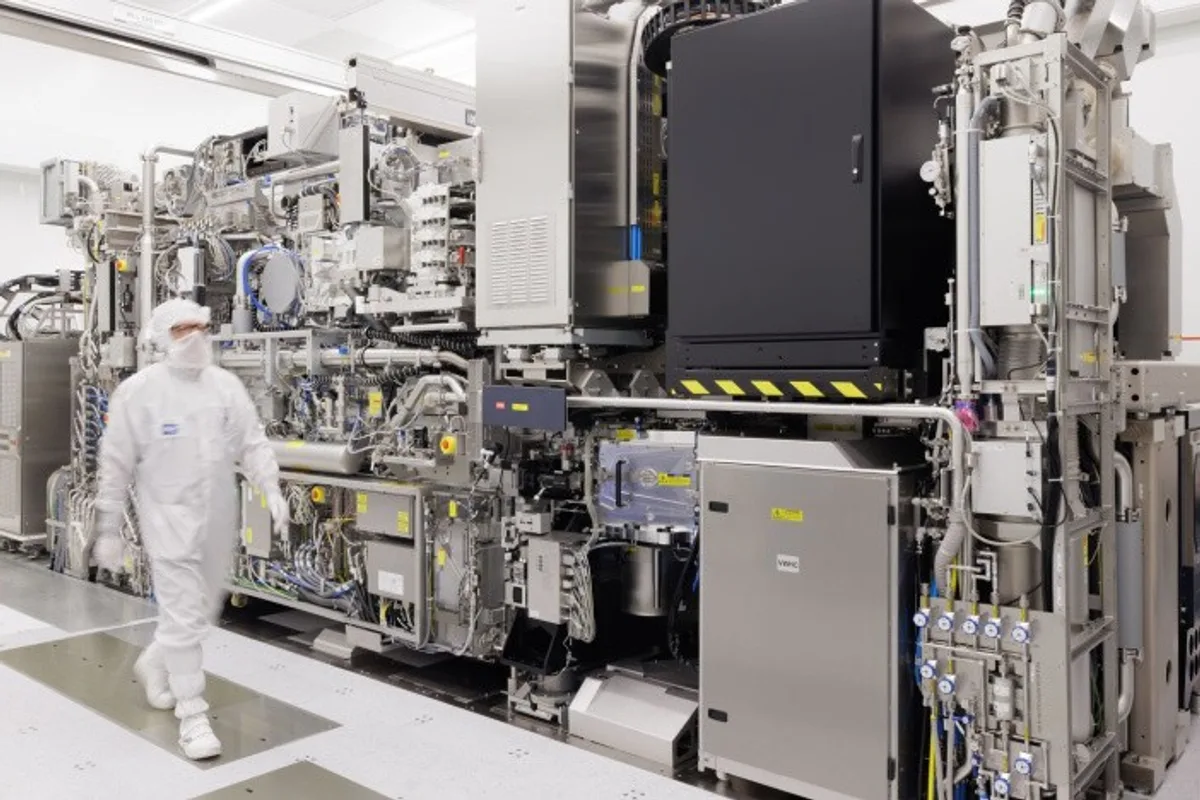
ASML is the world's only commercial supplier of extreme ultraviolet lithography systems. EUV technology uses light with a wavelength of 13.5 nanometers to pattern some of the most demanding layers in advanced chips.
These machines work alongside other equipment and manufacturing processes. Deep ultraviolet lithography remains important for many layers and for less advanced components. Consequently, the industry's production capacity cannot be described simply by counting EUV machines.
ASML's own plans cover both low-numerical-aperture EUV systems and DUV immersion equipment. That broader scope matters because manufacturers of advanced processors and memory rely on different combinations of tools throughout the production process.
Machine availability also shapes factory schedules. Installing a scanner is not equivalent to switching on a commodity server. Integration, process qualification and coordination with other production equipment all take time. Missing a delivery window can create complications well beyond the purchase of an individual machine.
A 30 percent capacity expansion may no longer be enough
ASML had already communicated plans to increase relevant manufacturing capacity by 30 percent. Now its customers' updated forecasts suggest that the expansion will not fully satisfy demand.
Chief executive Christophe Fouquet says customers have been raising their near- and medium-term equipment requirements, principally because of the expected scale and duration of AI-related investment. The company is examining options to expand its 2028 capacity beyond the increase it had previously announced.
The additional capacity remains under investigation. ASML has not established that every machine needed to meet those forecasts will be built or delivered. The distinction between an expansion plan and an achieved production rate is particularly important when discussing machinery of this complexity.
According to Reuters, ASML previously intended to reach annual production capacity of around 110 of its expensive EUV systems by 2028 and is now considering further additions. Even a comparatively small increase in machine output can matter when the number of available systems is limited and each one contributes substantial fabrication capability.
ASML can also improve supply without relying exclusively on new assembly lines. Upgrades to installed machines, faster manufacturing processes and new equipment offering higher wafer throughput can all increase the effective production capacity available to chipmakers.
Those improvements are not perfect substitutes for delivering additional scanners. The benefit depends on where the bottleneck lies inside each customer factory and how quickly changes can be qualified for production.
Customers are discussing the end of the decade already
One of the clearest signals of demand is the time horizon of customer discussions. ASML says some companies have expressed interest in placing equipment orders for 2029 and even 2030.
That interest should not be mistaken for confirmed deliveries or a fully booked schedule. Reuters reports that ASML has held back from accepting some distant orders while it evaluates customers' plans and preserves flexibility for buyers that have not yet finalized their requirements.
For a supplier with constrained capacity, accepting every early request would be commercially tempting but potentially damaging. It could lock in large allocations for a small group of manufacturers before the shape of the broader market becomes clear.
The major customers involved in advanced semiconductor manufacturing have different priorities. TSMC expands leading-edge logic production for a wide range of clients, while Samsung, SK Hynix and Micron participate in markets where memory demand linked to AI is increasingly important.
Their specific timelines also differ. Reuters noted that TSMC had previously said it did not expect equipment availability to constrain its expansion plans. ASML's aggregate demand warning therefore does not establish that every individual customer is currently facing a shortage.
Strong earnings support the outlook, but do not eliminate uncertainty
ASML's third-quarter numbers help explain why management is considering further expansion.
The company reported €11.662 billion in net sales, compared with €9.326 billion in the preceding quarter. Gross margin reached 57.5 percent and net income totaled €4.960 billion.
New lithography system sales rose to 113 units from 86 in the second quarter. That total spans relevant equipment categories rather than representing 113 EUV scanners alone.
ASML expects fourth-quarter revenue of between €14.2 billion and €15.2 billion. Its full-year revenue outlook stands at €44 billion to €45 billion, with a projected gross margin of approximately 56 percent.
These are substantial operating results, but a strong quarter does not settle the investment outlook for 2029 or 2030. Semiconductor manufacturing is capital-intensive and cyclical. Customers can revise their spending if end-market demand weakens, financing becomes more expensive or capacity already under construction proves sufficient.
AI infrastructure is currently a powerful driver of equipment demand. The durability of that spending, however, depends on the economic value created by the services and products using those chips. The industry must ultimately justify its investments through revenues and productivity, not simply through larger equipment orders.
Supply constraints create opportunities and risks
ASML benefits from an unusual competitive position. Advanced EUV systems have no equivalent commercial supplier offering a straightforward replacement. That gives customers a strong reason to maintain long-term relationships and plan purchases well ahead of time.
Scarcity can also support pricing. Reuters reports that ASML expects price increases in 2027 and 2028. But higher prices are not the same as sustainable profit growth if production expansion requires substantial new investment and demand later slows.
An additional manufacturing site in the Eindhoven region is part of the longer-term response. Its first phase, however, is not expected to become operational until 2029, according to Reuters. It cannot therefore be counted as an immediate solution to the capacity gap now projected for 2027 and 2028.
The company must manage a network of specialized suppliers and components while increasing the speed of its own assembly processes. Management has indicated that its existing supply chain, including key optics partner Zeiss, is not currently the principal limiting factor.
That does not make further scaling trivial. Precision systems need manufacturing expertise, testing procedures and reliable production processes. Adding workers or factory space alone cannot eliminate every constraint.
Europe's strategic position comes with global dependencies
ASML's location in the Netherlands gives Europe a critical role in the semiconductor supply chain. The most visible AI chips may be designed in the United States and manufactured in Asia, but vital equipment required for their production comes from a company headquartered in Veldhoven.
This importance should not be confused with complete European independence. ASML depends on specialized suppliers, international customers and global trade relationships. It is a highly strategic participant in an interconnected manufacturing system.
Export restrictions add another source of complexity. Controls affecting sales of advanced technologies to China can change the accessible market for particular categories of equipment, even as demand grows elsewhere.
The international distribution of chip manufacturing also means that equipment scarcity can have different consequences for different countries and companies. An established manufacturer able to secure delivery slots may advance its expansion, while a new entrant with an ambitious but unproven project could face a more difficult timetable.
The overlooked constraint in the AI boom
The popular conversation about AI infrastructure tends to focus on GPUs, energy consumption and the enormous cost of data centers. ASML's outlook adds another essential element: the machinery needed to increase the world's chip manufacturing capability.
There is no reason to interpret the announcement as proof that AI expansion will stop in 2028. Installed equipment can become more productive, new tools can be delivered and chipmakers can reorganize their production plans. The effects will vary across customers and technologies.
Still, ASML's statement is more than an abstract warning. The company believes the supply it currently plans for two specific years will not fully satisfy the demand its customers expect. That is an unusually clear indication of pressure at a critical industrial chokepoint.
The coming years will test two competing assumptions. ASML is investing on the expectation that advanced semiconductor demand remains strong enough to justify higher equipment output. Investors, meanwhile, must consider whether the AI industry's current spending trajectory can support those expectations throughout the remainder of the decade.
For chipmakers, the message is immediate even if the projected shortage lies in the future: manufacturing capacity must be secured well before the chips are needed. For ASML, the challenge is harder. It must decide how much more equipment to build without knowing precisely how long today's extraordinary investment cycle will last.